
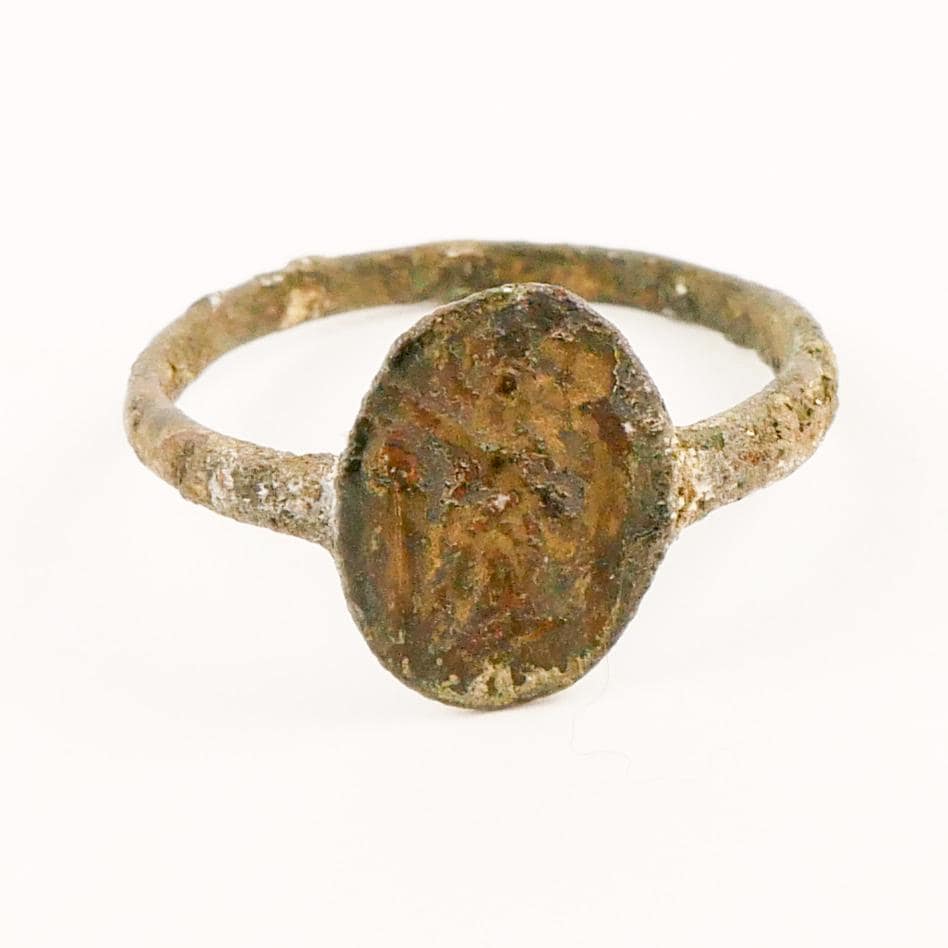
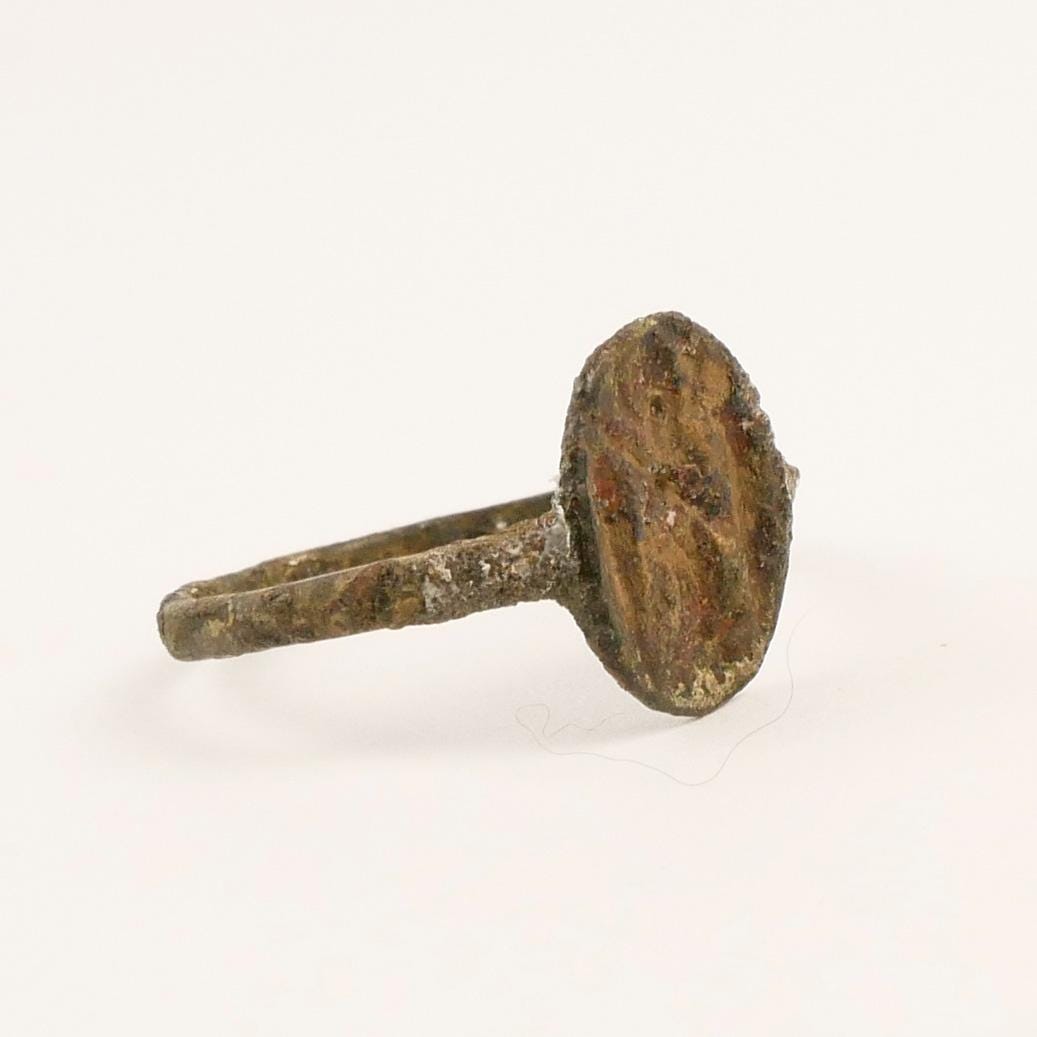
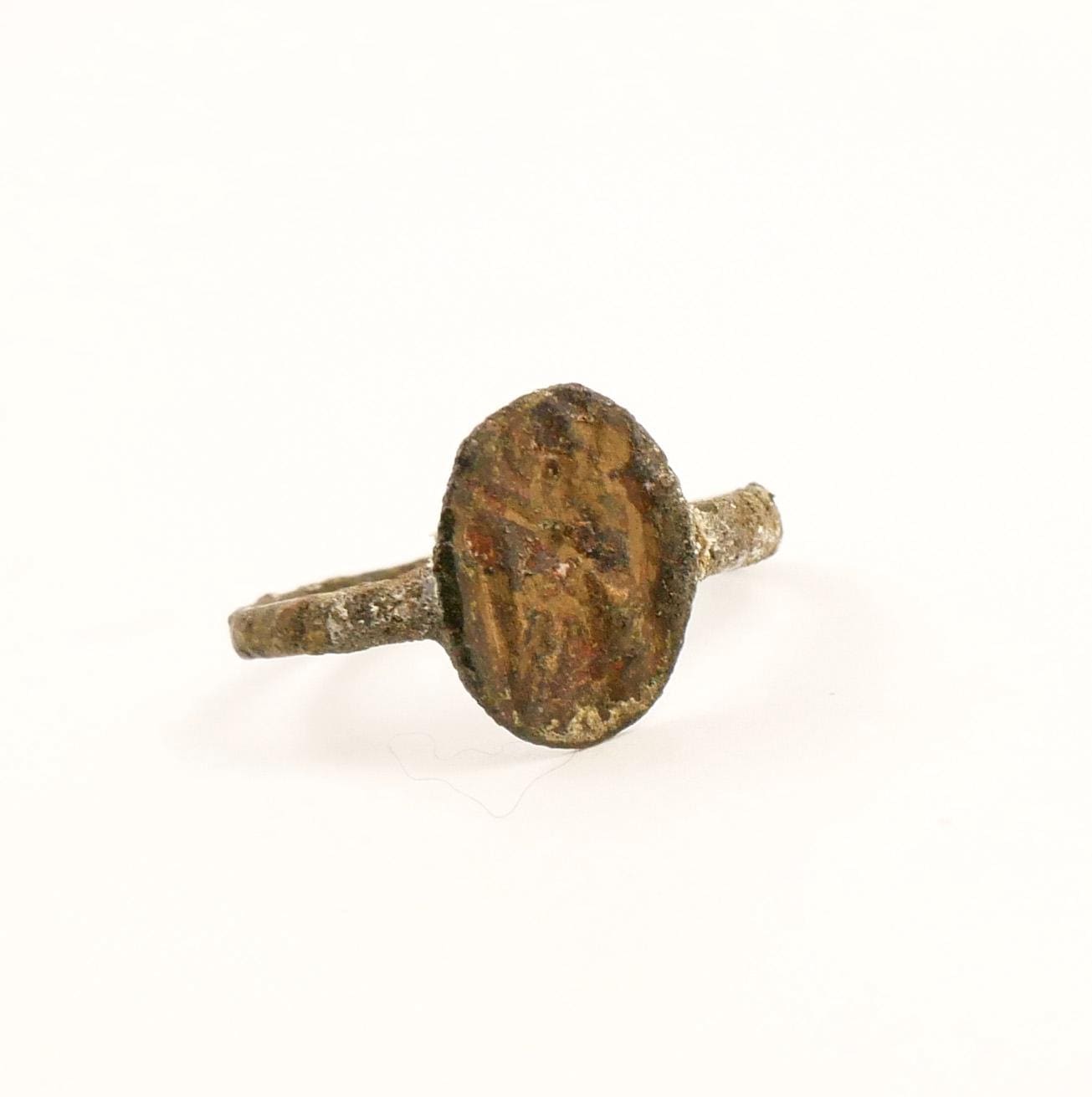
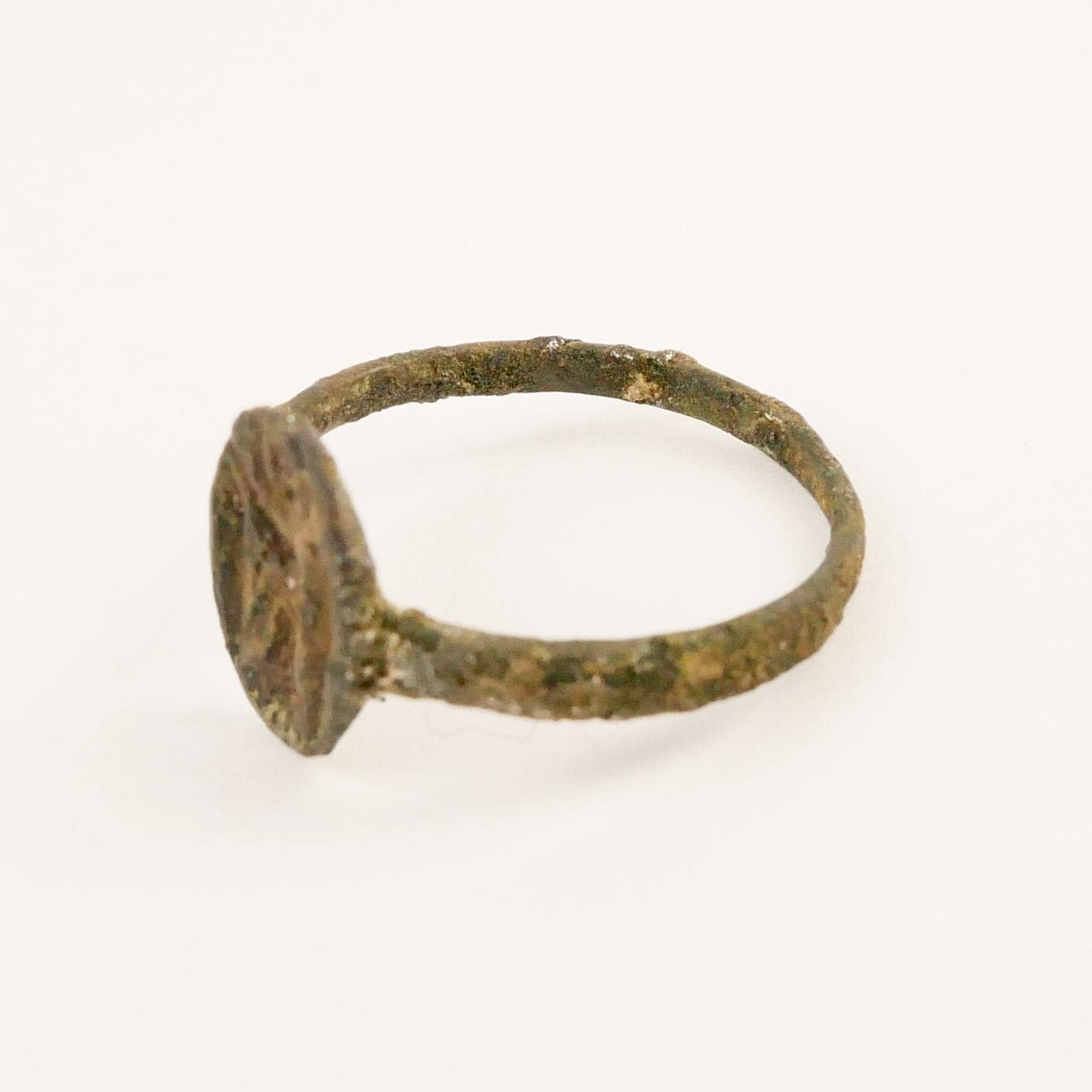
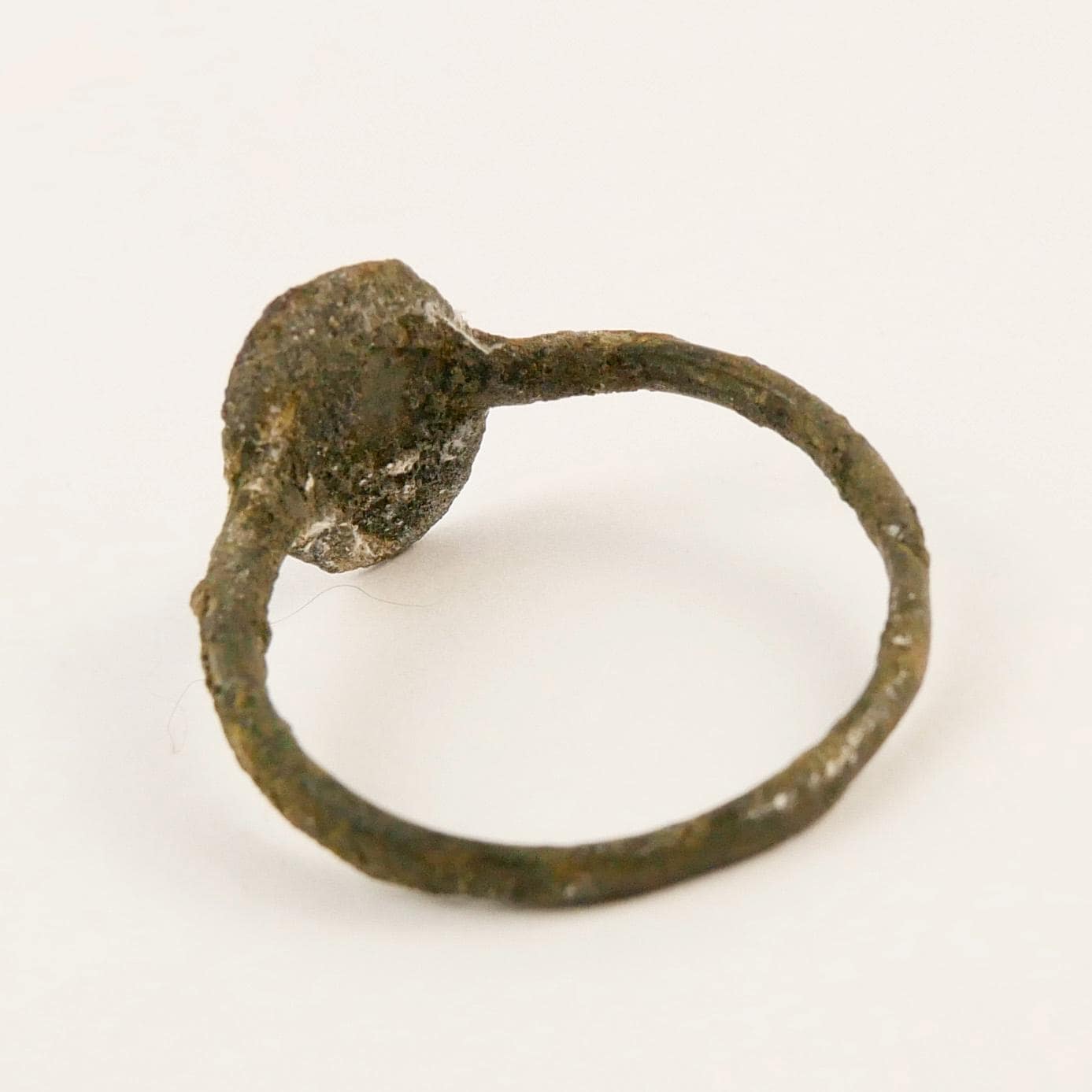
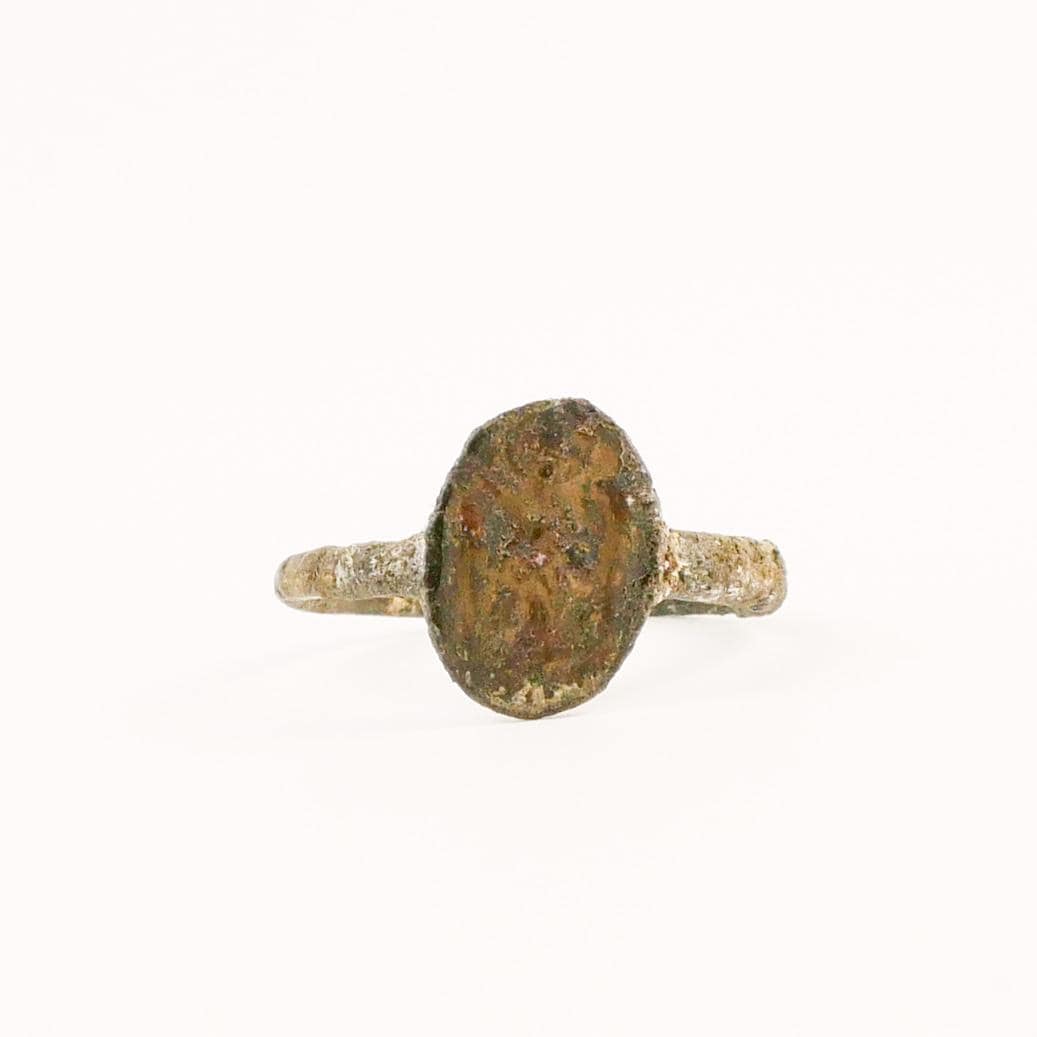
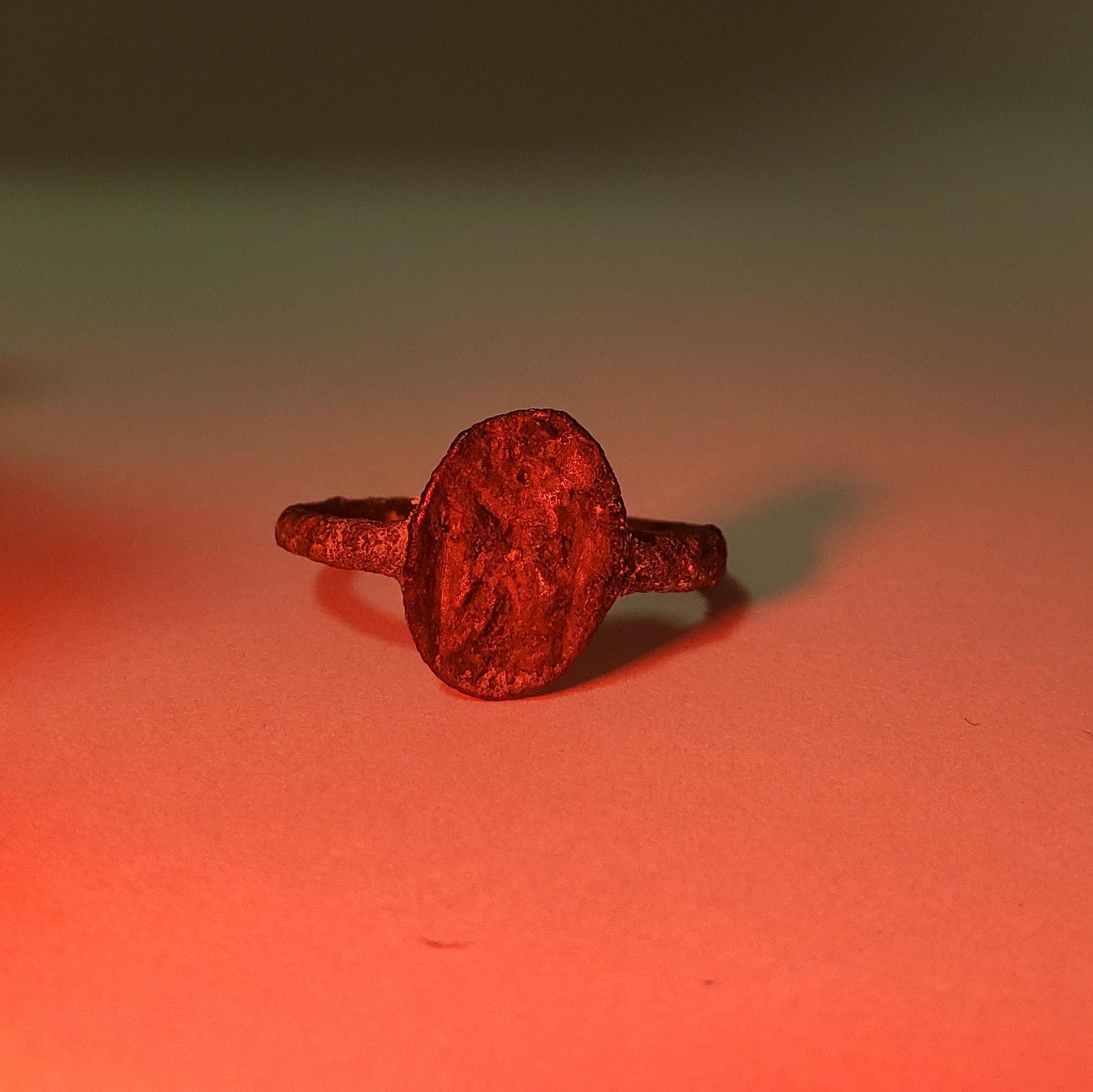
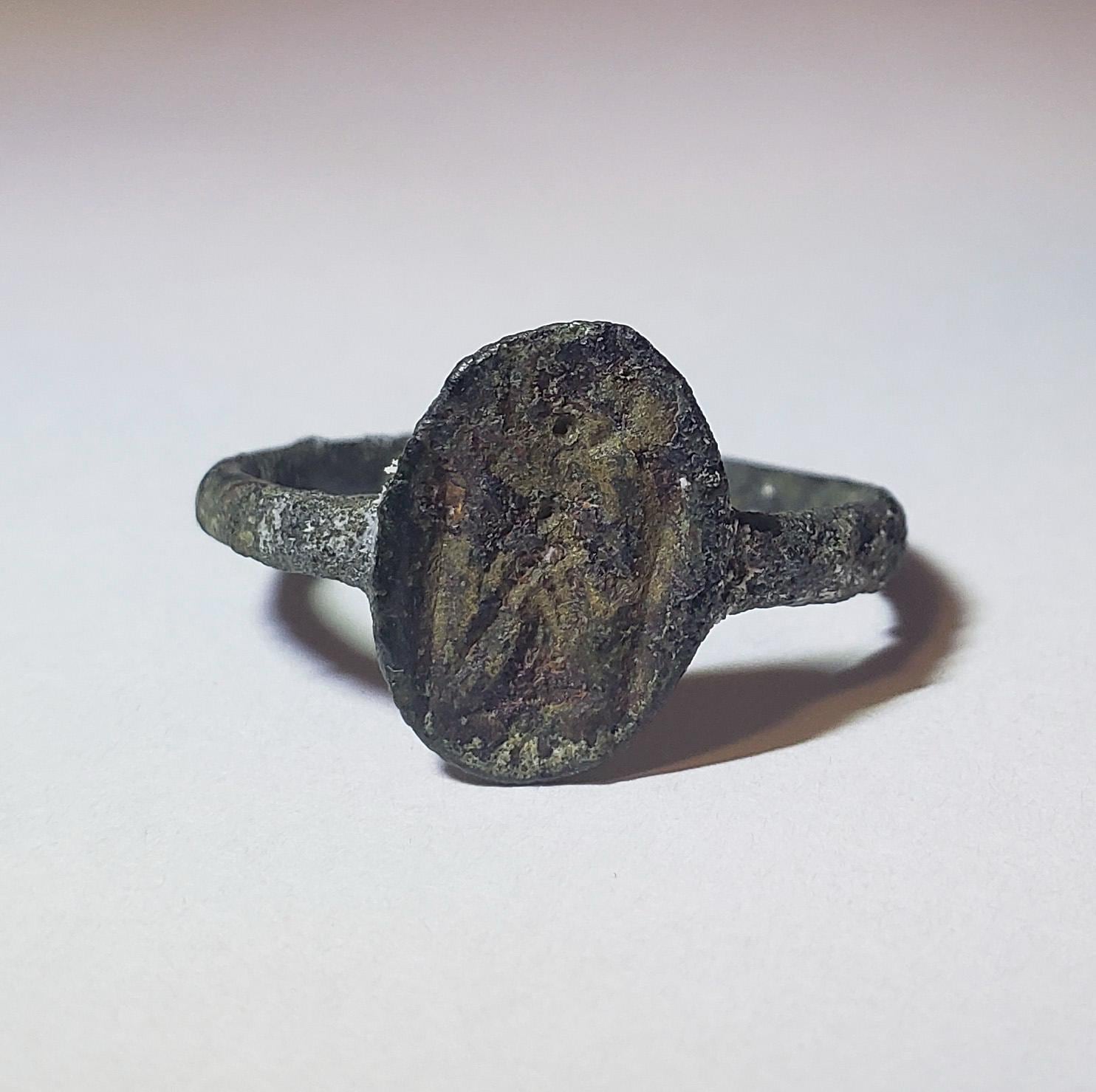
This artifact is an authentic Late Roman to Early Byzantine bronze bezel ring, dating to the 4th to 7th centuries AD. The justification for this specific dating lies directly in its minimalist, utilitarian geometry. Unlike later Middle Byzantine rings, which often featured heavy, thick-cast shoulders and architectural, lobed bezels, this piece utilizes a simple, unadorned thin band that attaches directly to a flat, thin oval face. This straightforward, wire-like hoop and basic oval profile—designed without excess metal or decorative framing—are hallmark characteristics of provincial Late Roman and Early Byzantine craftsmanship.
Rather than a piece of elite, decorative jewelry, bronze rings of this unassuming style were practical, everyday wear for commoners, merchants, or soldiers traversing the ancient world. The flat oval bezel would have originally been engraved with a simple motif, a protective symbol like a cross, or a basic geometric pattern meant to offer spiritual protection or denote personal identity.
Furthermore, unlike pristine museum pieces, the face of this ring bears the heavy, undeniable marks of true antiquity. Whatever original motif once graced the oval bezel has been completely smoothed away by intense, daily wear and centuries of oxidation. This heavy wear adds a profound layer of historical romance.
Measurement -
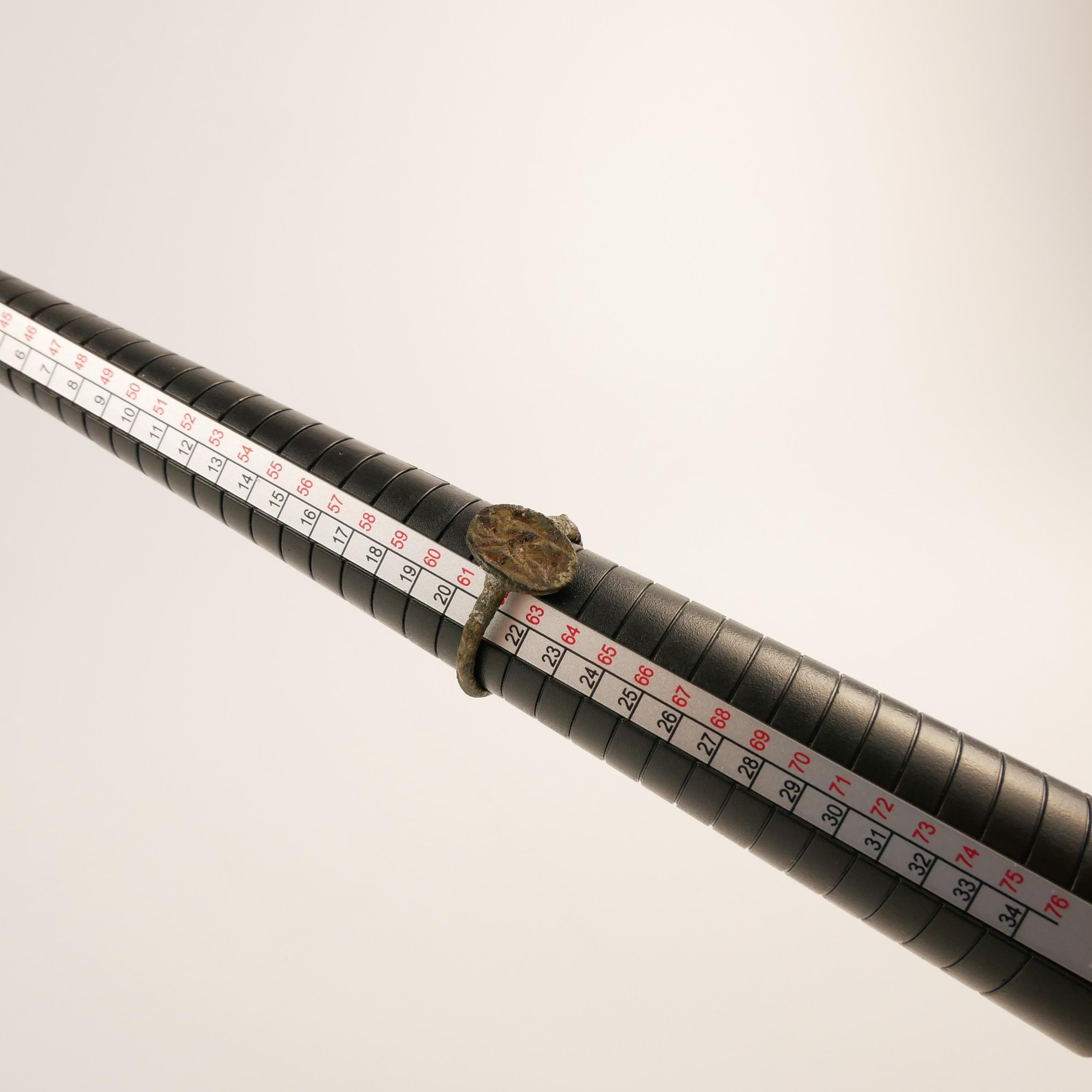
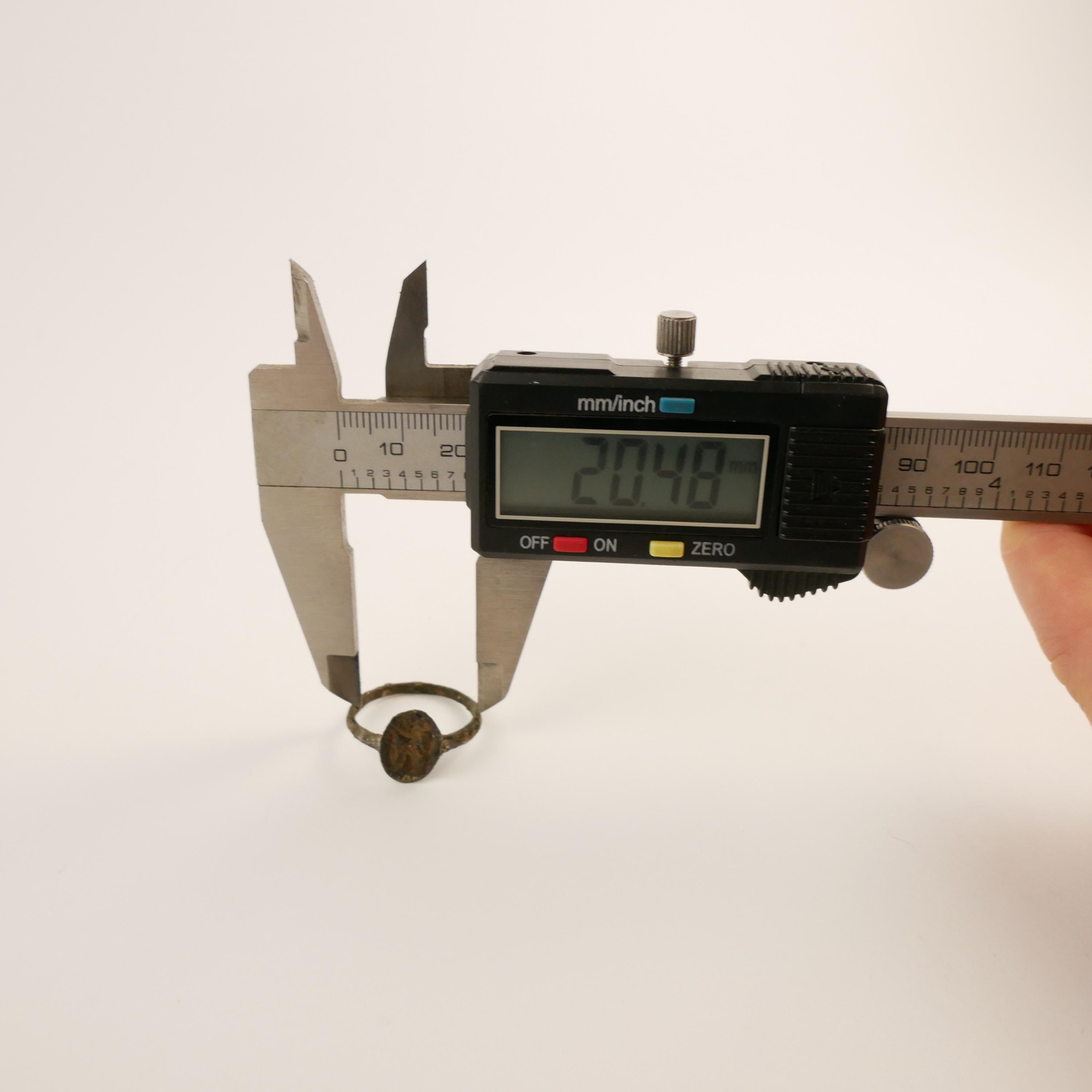
Per our measuring wand, the US size is approximately 10. My calipers measured this as 20.48mm across the inside (see picture).
Provenance -
I bought this ring from TimeLine Auctions in the U.K., and I imported it.
Condition -
The current uniform, porous, dark-brown surface of the ring is a result of post-excavation treatment. When ancient bronze or iron is buried for centuries, it develops thick, multi-layered mineral crusts of malachite or cuprite, often cementing soil into the deepest crevices of the metal. To quickly prepare bulk artifacts for the antiquities market or auction houses, finders frequently subject them to aggressive chemical stripping, such as harsh acid dips or lye baths. This rapid cleaning destroys the natural ancient patina and exposes the bare, pitted base metal, resulting in the spongy, matte appearance seen here, while occasionally leaving microscopic traces of original silver plating deep in the un-stripped crevices.
Not perfectly round, but it does slide onto my finger.