
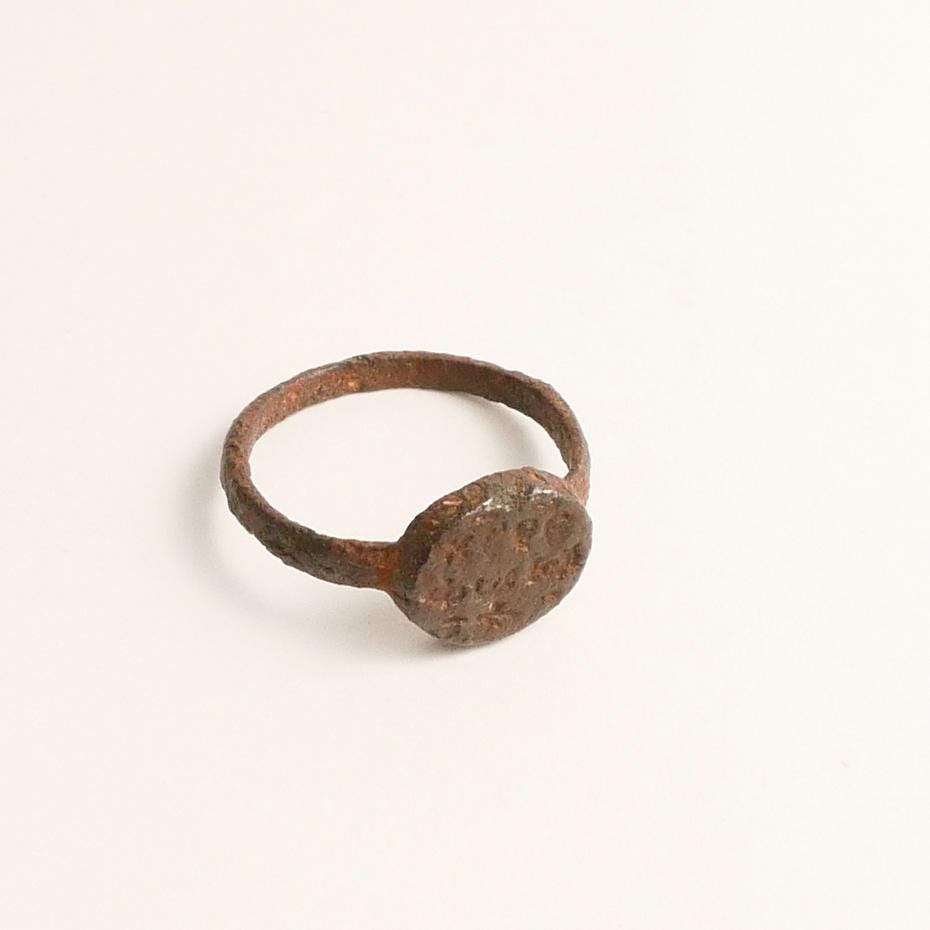
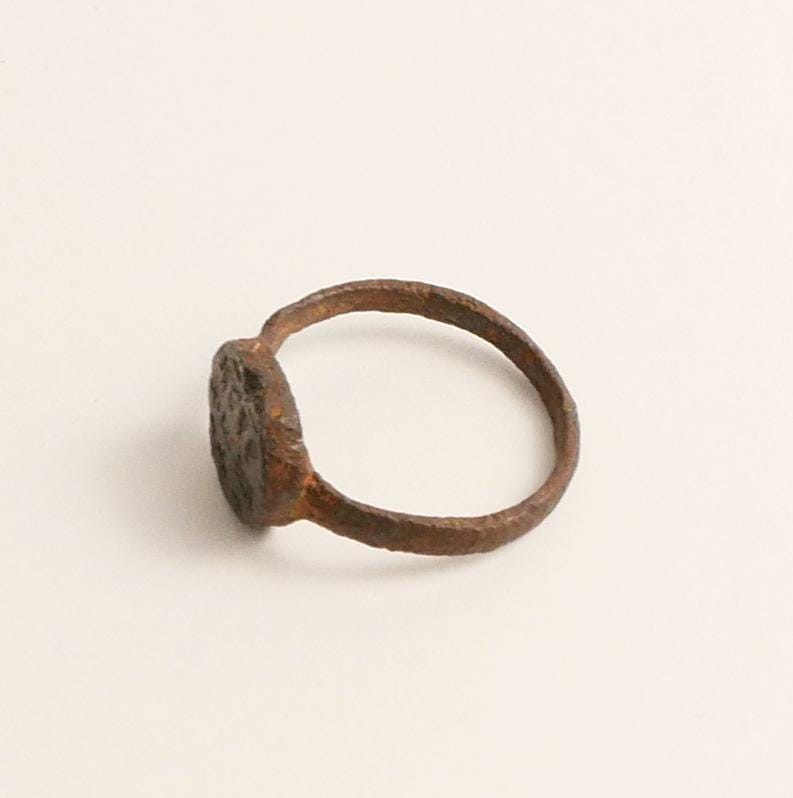
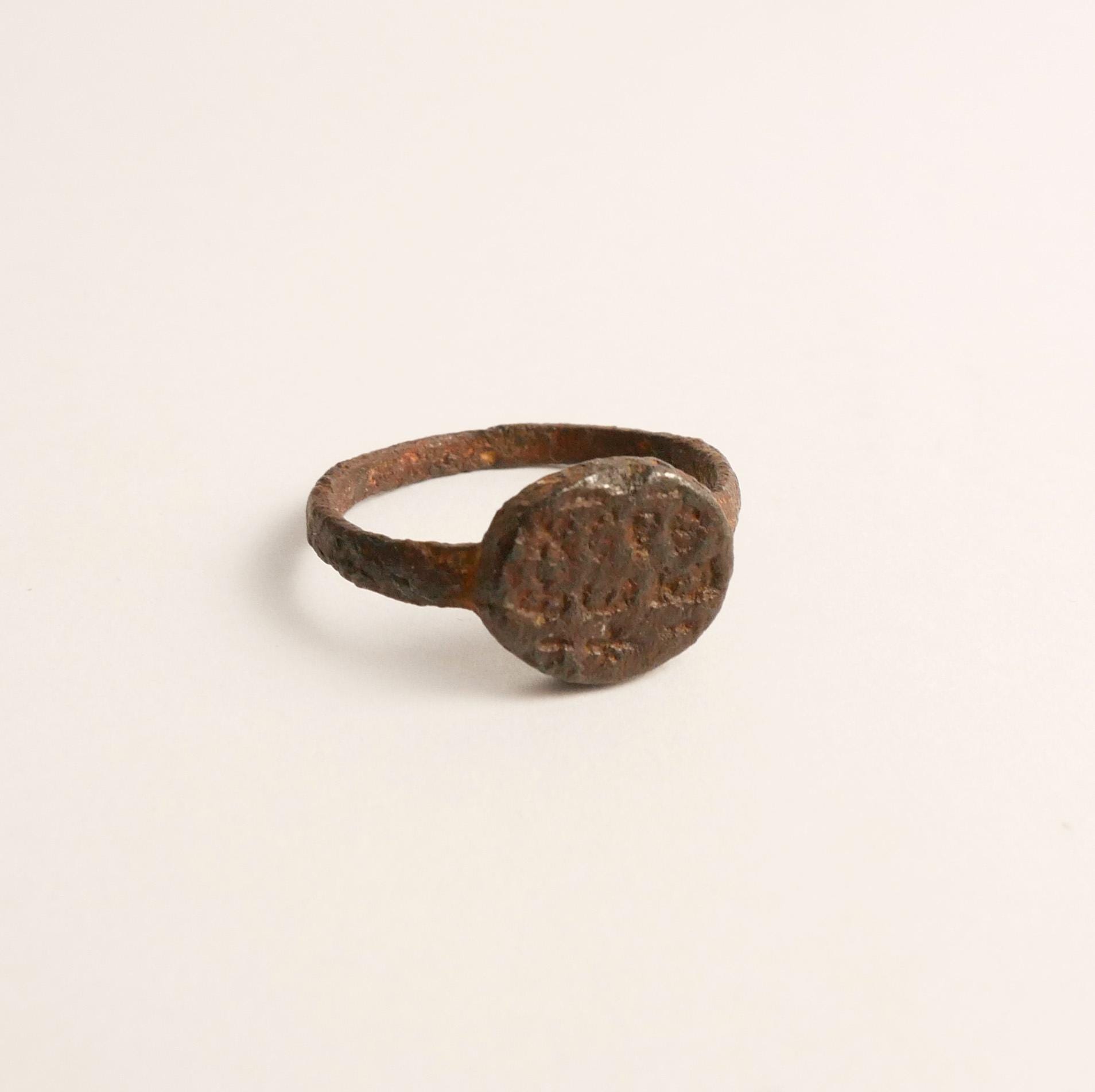
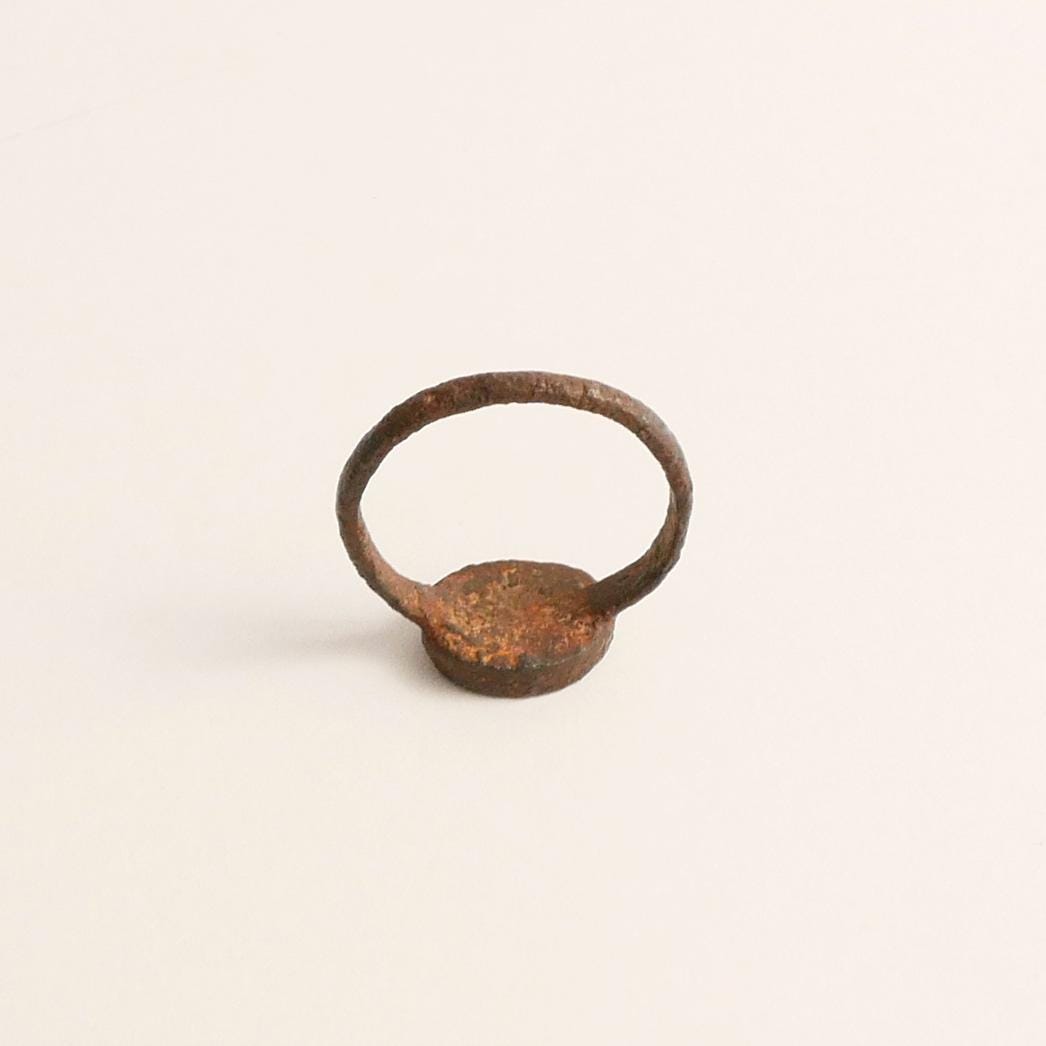
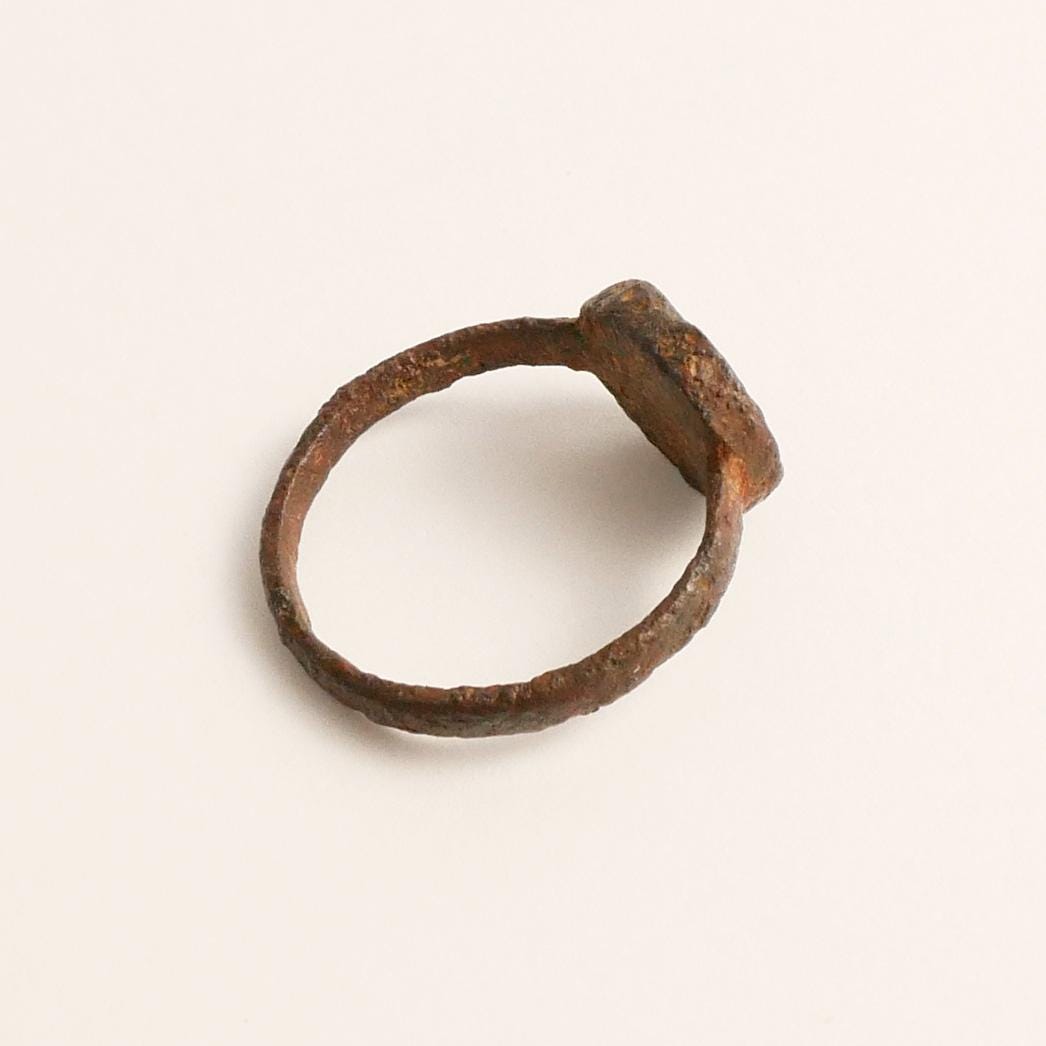
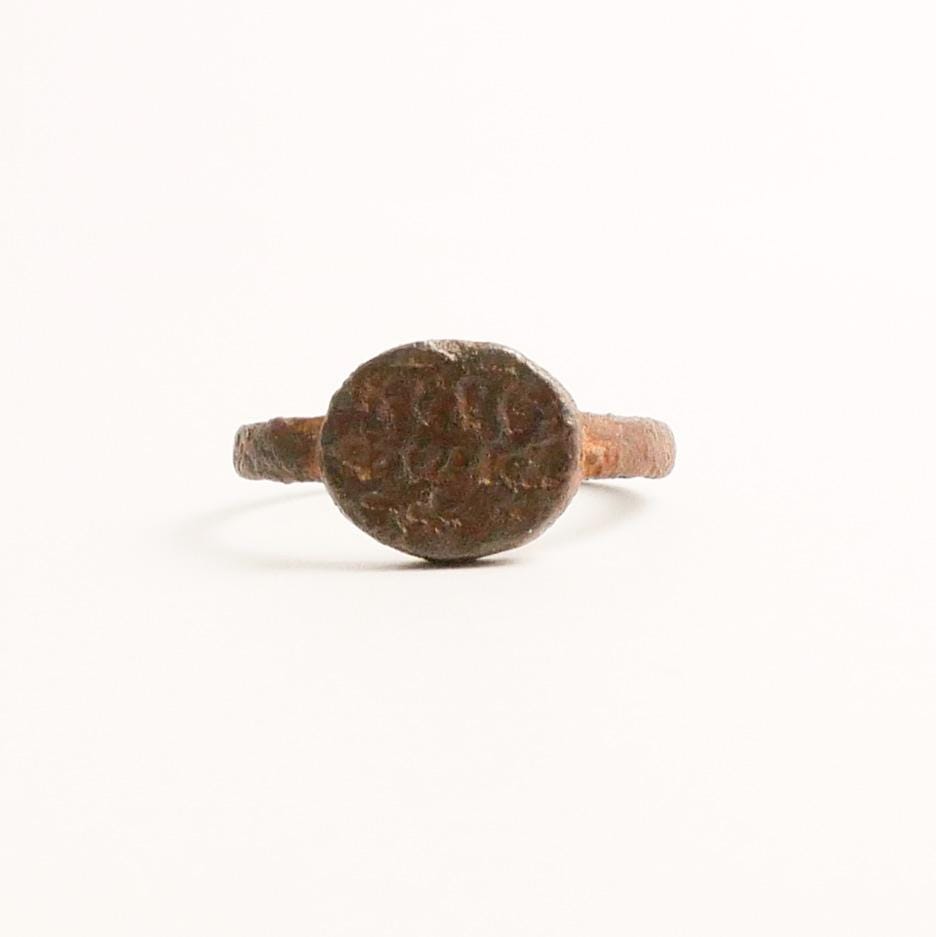
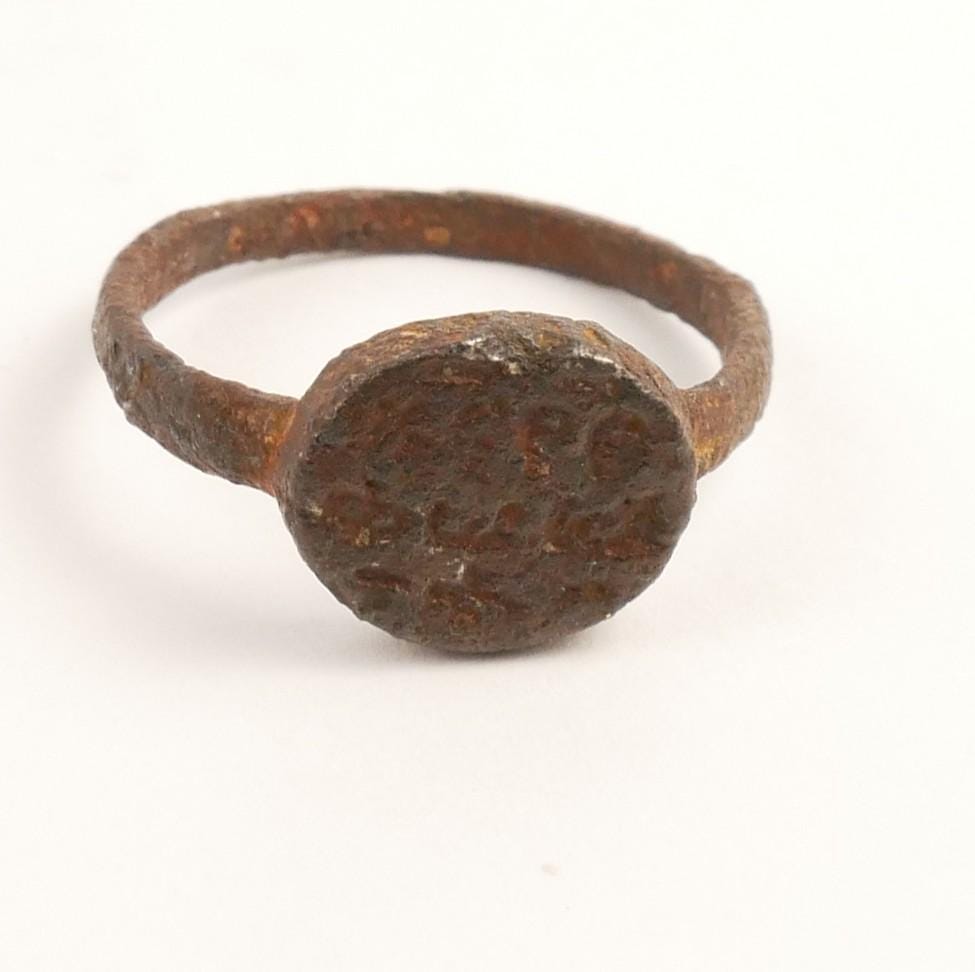
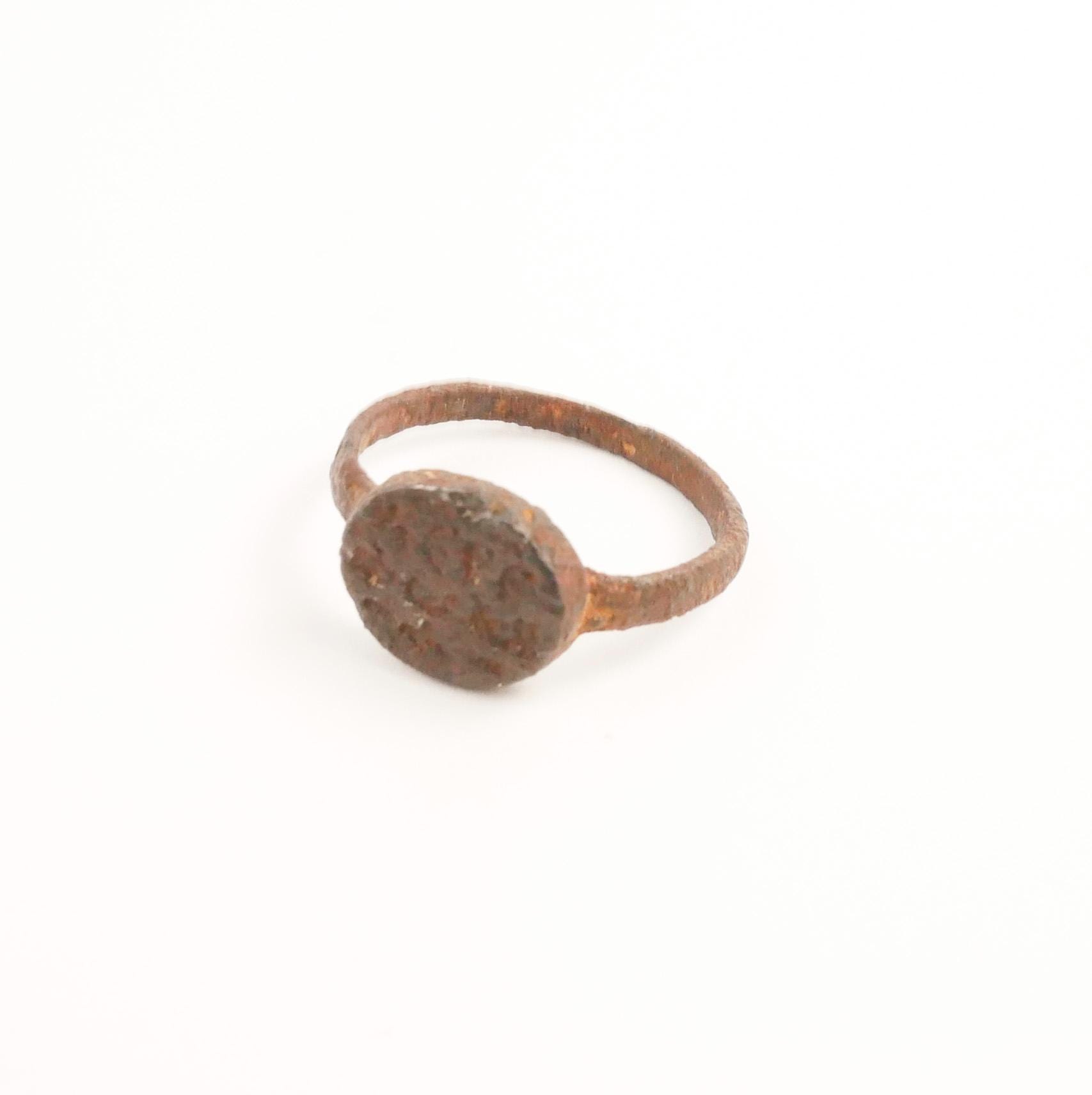
Byzantine ring with cross, a form of Kyrie and a personal name (circa 6th-9th century BC)
$149.99
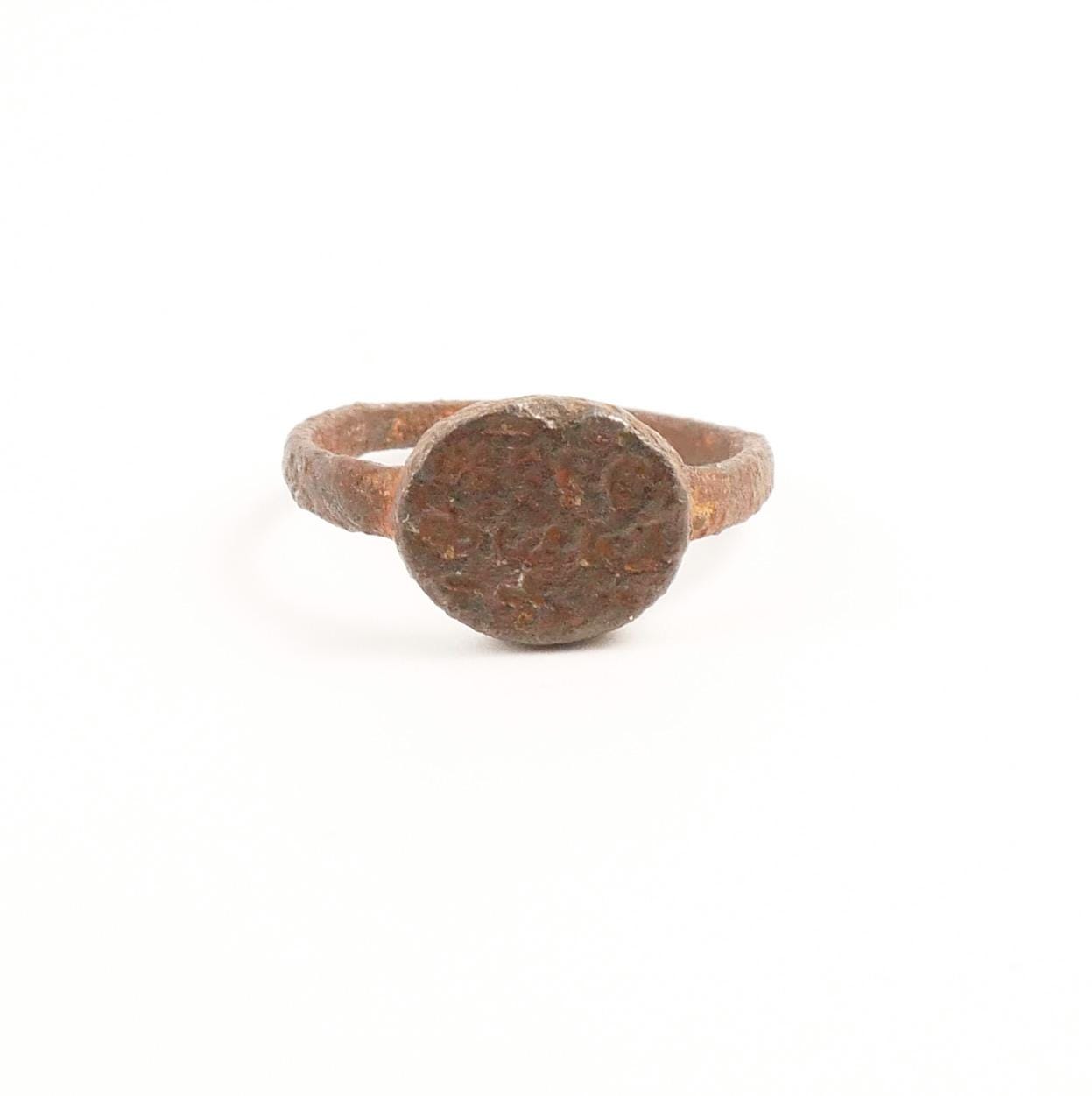
This artifact is a Byzantine personal signet ring, dating to a transitional window between the 6th and 9th centuries AD. Rather than decorative jewelry, bronze and iron rings of this weight and style were practical, everyday tools for commoners, merchants, or soldiers in the Eastern Roman Empire. Their primary purpose was to be pressed into hot wax to seal documents, secure private correspondence, or mark property. Because these rings acted as legal signatures, they were highly personalized, combining the owner's name with visual declarations of their Christian faith, acting simultaneously as a legal stamp and a continuously worn protective amulet.
The physical construction of the ring highlights its utilitarian purpose and points directly to Middle Byzantine manufacturing methods. The piece is formed through a single-piece lost-wax casting technique, proven by the seamless transition where the band merges smoothly into the shoulders of the thick, heavy bezel. This thick face plate was engineered to withstand the repeated heavy pressure of stamping into wax without snapping off the band. The bezel itself features a deliberate double-lobed or scalloped upper edge. While a modern eye might mistake this for the top of a heart symbol (a shape that did not exist in this era), this lobed contour was a common framing device in Byzantine metalwork, designed to echo architectural arches and house specific internal framing marks.
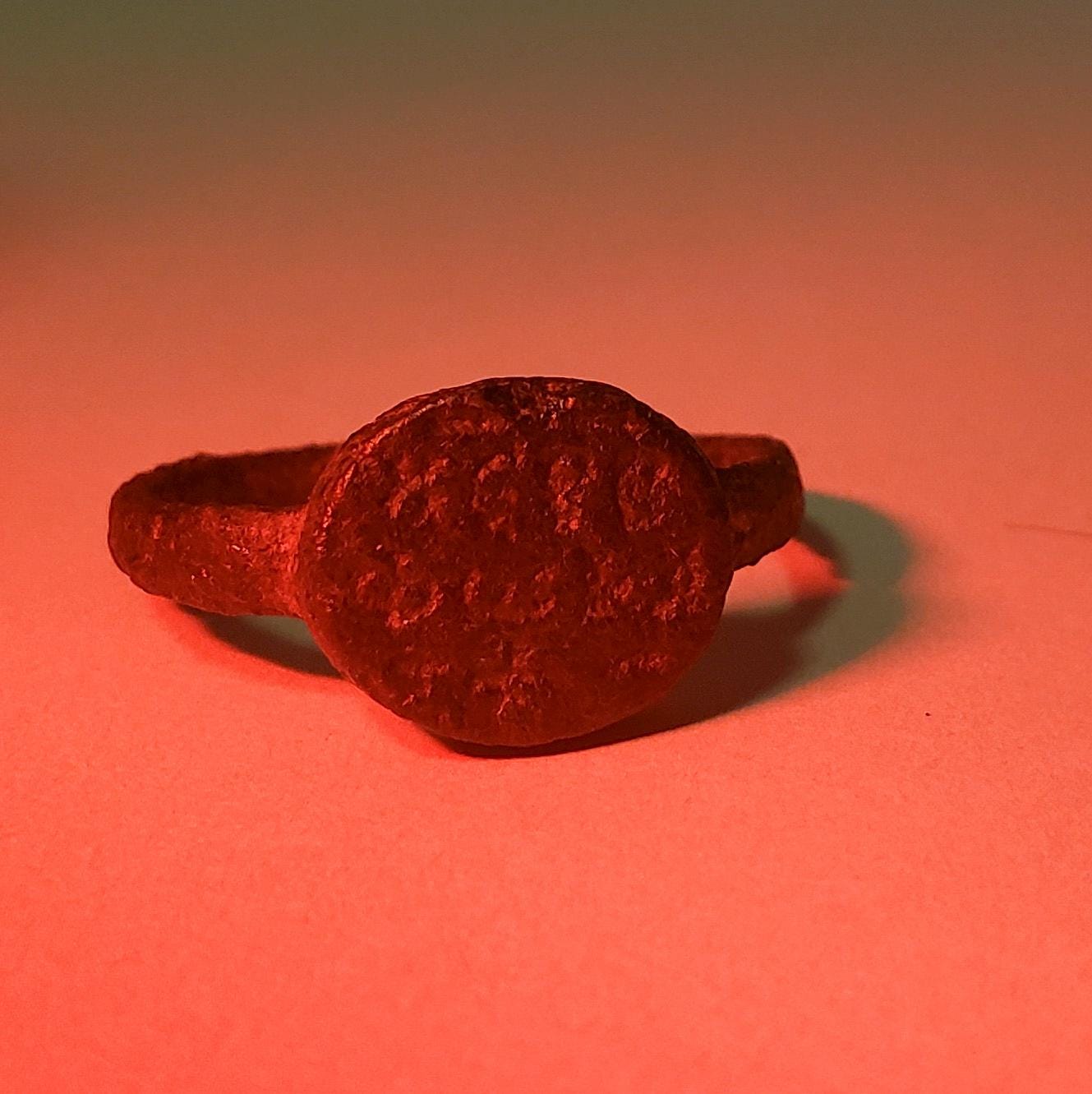
The inscription carved into the face of the ring reads "K E P E" on the top line and "Φ ω K A" on the second line, anchored at the bottom by an equal-armed Greek cross. The lettering is notable for mixing rigid, classical Roman square capital 'E's with a cursive, lowercase-style Greek omega ('w'). This specific clash of old and new fonts is a hallmark of provincial metalworkers during the 6th to 9th-century transition. The first line, "K E P E" (Kappa, Epsilon, Rho, Epsilon), is a phonetic, localized spelling of *Kyrie*, meaning "Lord". It acts as an invocation, calling down divine protection or blessing upon the wearer.
The second line, "Φ ω K A," provides the name of the ring's original owner: Phocas. Crucially, the name is spelled in the grammatical genitive (possessive) case, dropping the final 'S'. This was the universal standard for signet rings, meaning the stamp literally translates to "[The seal] of Phocas". The name Phocas was highly popular in the Byzantine Empire, largely due to the veneration of Saint Phocas the Gardener, a patron saint of sailors and agricultural workers, and the later prominence of the aristocratic Phokas military dynasty. By placing the invocation directly above the possessive name, the full sentiment reads as a unified prayer: "Lord, protect Phocas".
Measurement -
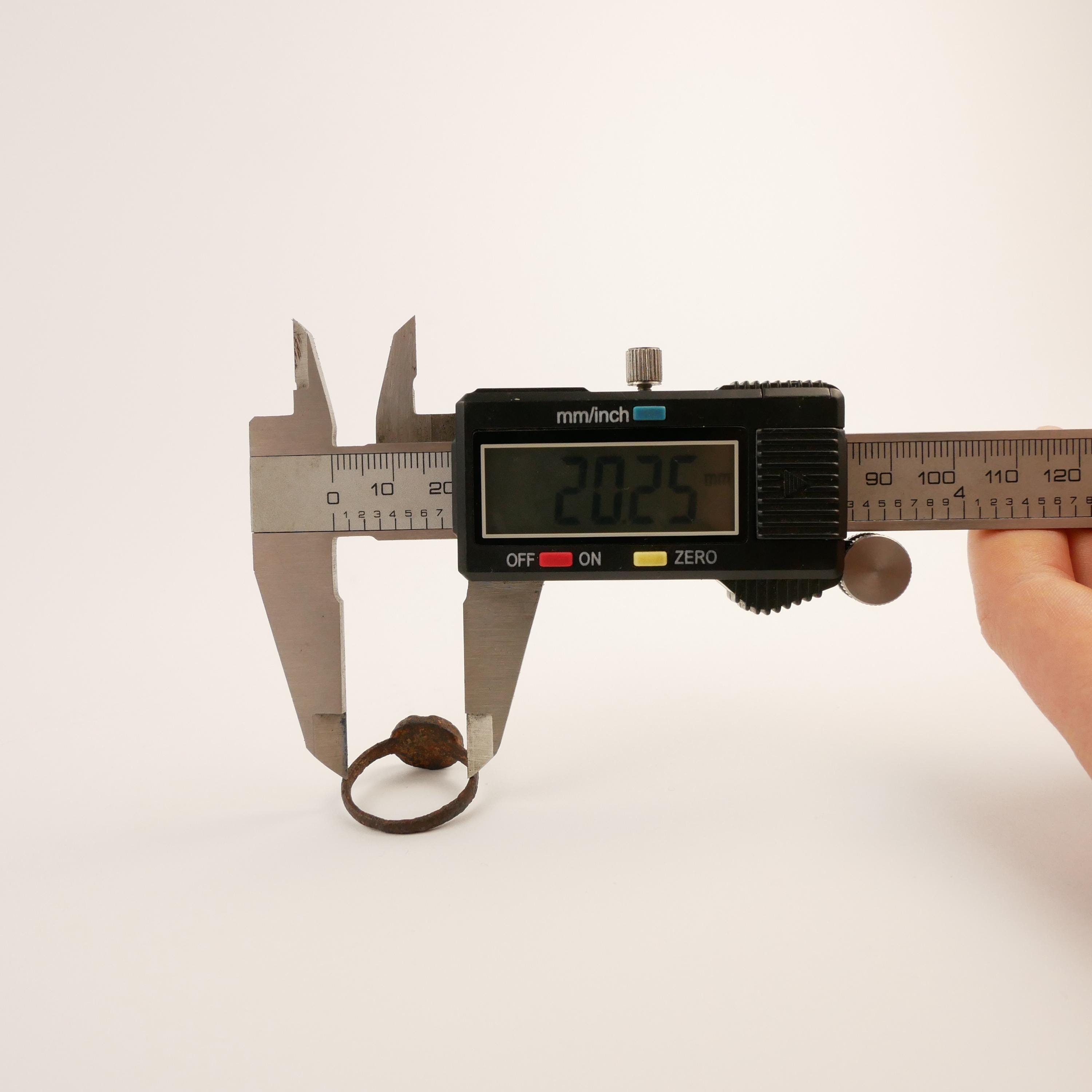
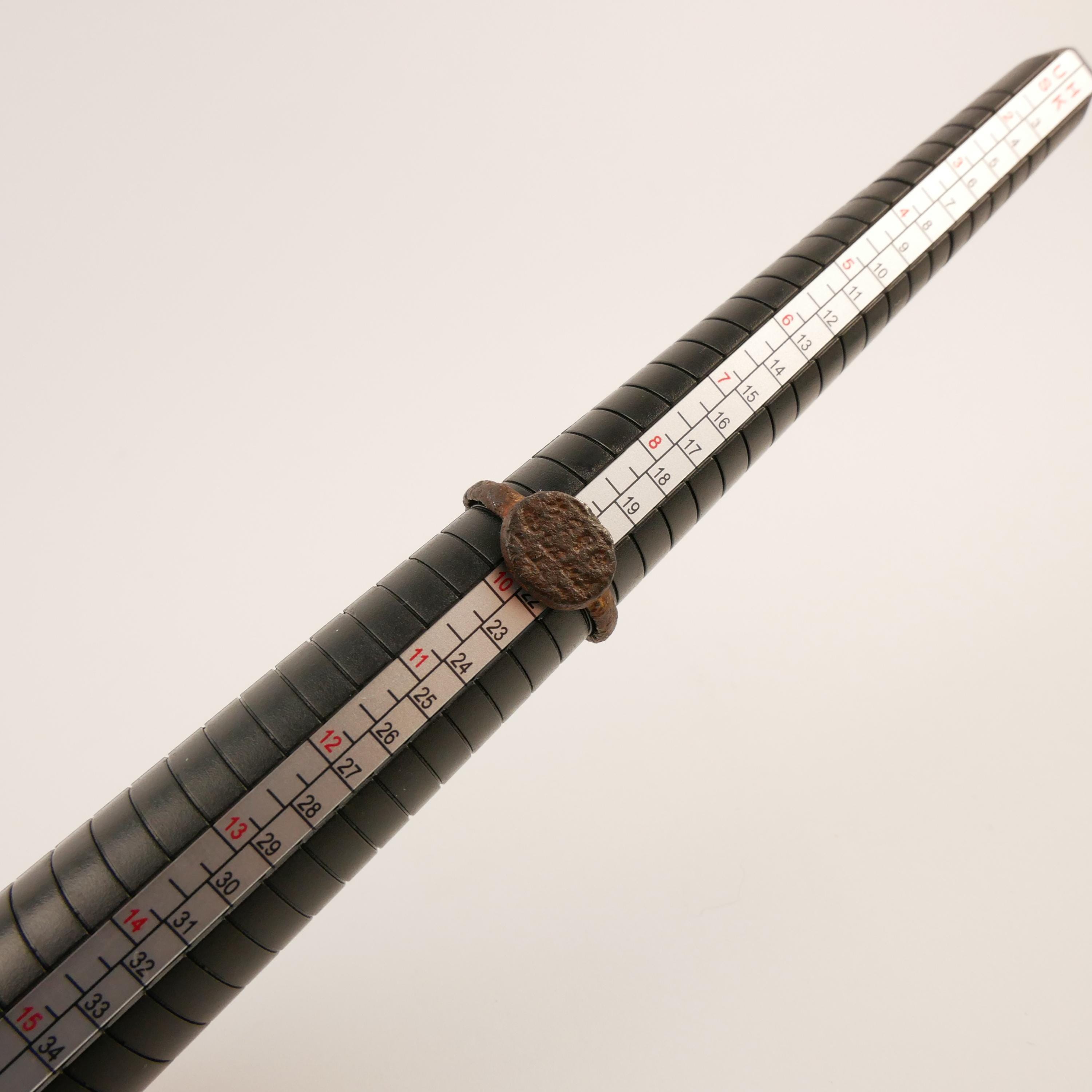
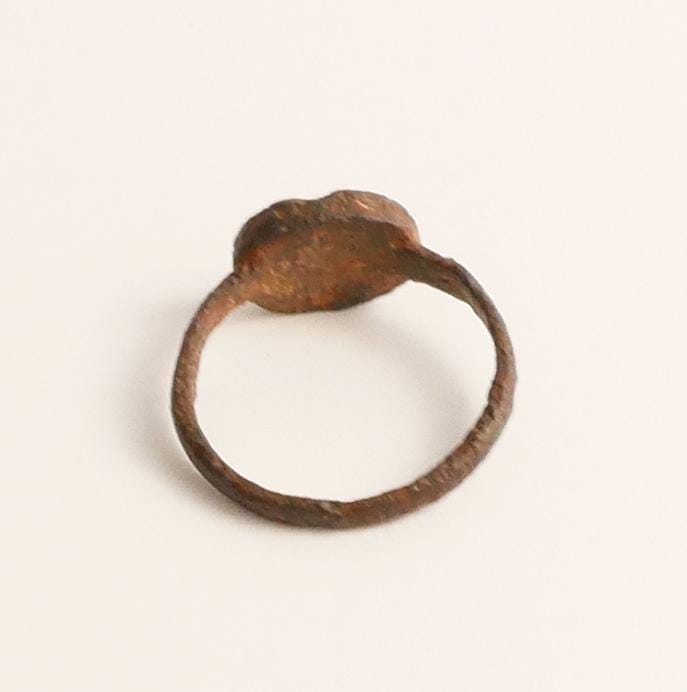
Per our measuring wand, the US size is between a 9 and 9.5. My calipers measured this as 20.25mm across the inside (see picture).
Provenance -
I bought this ring from TimeLine Auctions in the U.K., and I imported it.
Condition -
The current uniform, porous, dark-brown surface of the ring is a result of post-excavation treatment. When ancient bronze or iron is buried for centuries, it develops thick, multi-layered mineral crusts of malachite or cuprite, often cementing soil into the deepest crevices of the metal. To quickly prepare bulk artifacts for the antiquities market or auction houses, finders frequently subject them to aggressive chemical stripping, such as harsh acid dips or lye baths. This rapid cleaning destroys the natural ancient patina and exposes the bare, pitted base metal, resulting in the spongy, matte appearance seen here, while occasionally leaving microscopic traces of original silver plating deep in the un-stripped crevices.
Not perfectly round, but does fit. I've worn it (adult male) around for a while and it was comfortable.